

 Check for Free Delivery
Blog
A Buyer’s Guide to Callebaut Couverture

By Foodistribute
Founded in Belgium way back in 1911, Callebaut has been setting a new standard for the art of chocolate making for more than a century. Today, one of their signature products is the Callebaut couverture, a chocolate carrying enough cocoa butter to flow thin and set with a snap.
Below, we’ll explain some of their best applications for couverture, as well as the fantastic range of options that you can find right here at Food Distribute.
The History of Callebaut and Belgian Chocolate
Let’s rewind to 1911 in the tiny Belgian village of Wieze, where Octaaf Callebaut made the brilliant decision to swap his family’s beer brewery for a chocolate factory! Octaaf tinkered away until he perfected the legendary 811, 823, and W2 recipes, the same iconic, perfectly balanced formulas that still rule the pastry world today.
In 1988, they completely revolutionised kitchen prep by inventing the “callet.” By transforming massive, stubborn chocolate blocks into easy-to-melt, perfectly uniform little drops, they saved generations of pastry chefs from the endless, messy chore of chopping, earning them a permanent spot as the absolute rockstars of Belgian chocolate.
What is Couverture?
In the culinary world, the term couverture is less of a style and more of a strict working specification. By law, couverture chocolate must carry at least 31% cocoa butter (or total fat). This fat content (which is pressed directly from the cocoa bean) is the structural engine of the chocolate.
Unlike supermarket baking blocks or compound coatings that swap cocoa butter for cheaper vegetable fats, true couverture behaves predictably under heat and through a temper. It gives you a clean mouthfeel, a high-gloss finish, and the fluid workability needed to coat a bonbon in a shell that breaks cleanly.
Cocoa Percentage vs. Fluidity
Without knowledge and experience, it’s easy to assume that a higher cocoa percentage means a “better” chocolate for every application. In reality, moving from a 54.5% dark to a 70% dark actually increases the dry, non-fat cocoa particles. This then adds a level of intensity, bitterness, and thickness, but does not necessarily make the chocolate flow better.
What’s also important to know is that two chocolates can print the same percentage and behave entirely differently. Always choose your chocolate based on the specific job on your bench.
Callebaut’s Core Range: Finding Your Fit
At Foodistribute, we stock all the essential Callebaut chocolate you need, available in highly efficient callets (small, uniform buttons that melt evenly for hand-tempering) or blocks for high-volume machine tempering.
Here’s a look at some of the many different couverture options on offer:
Callebaut 811 Fairtrade Dark Chocolate
The same smooth chocolate you’d expect from Callebaut with a fair trade label. This recipe is certified by the Fairtrade labelling organisation, allowing you to make the Fairtrade claim on your menu and on-pack.
Recipe n° 811 Fairtrade has the same round and well-balanced taste you may know from Callebaut’s most iconic dark chocolate. Its taste is defined by a smooth cocoa body and pleasant intensity with fresh top notes.
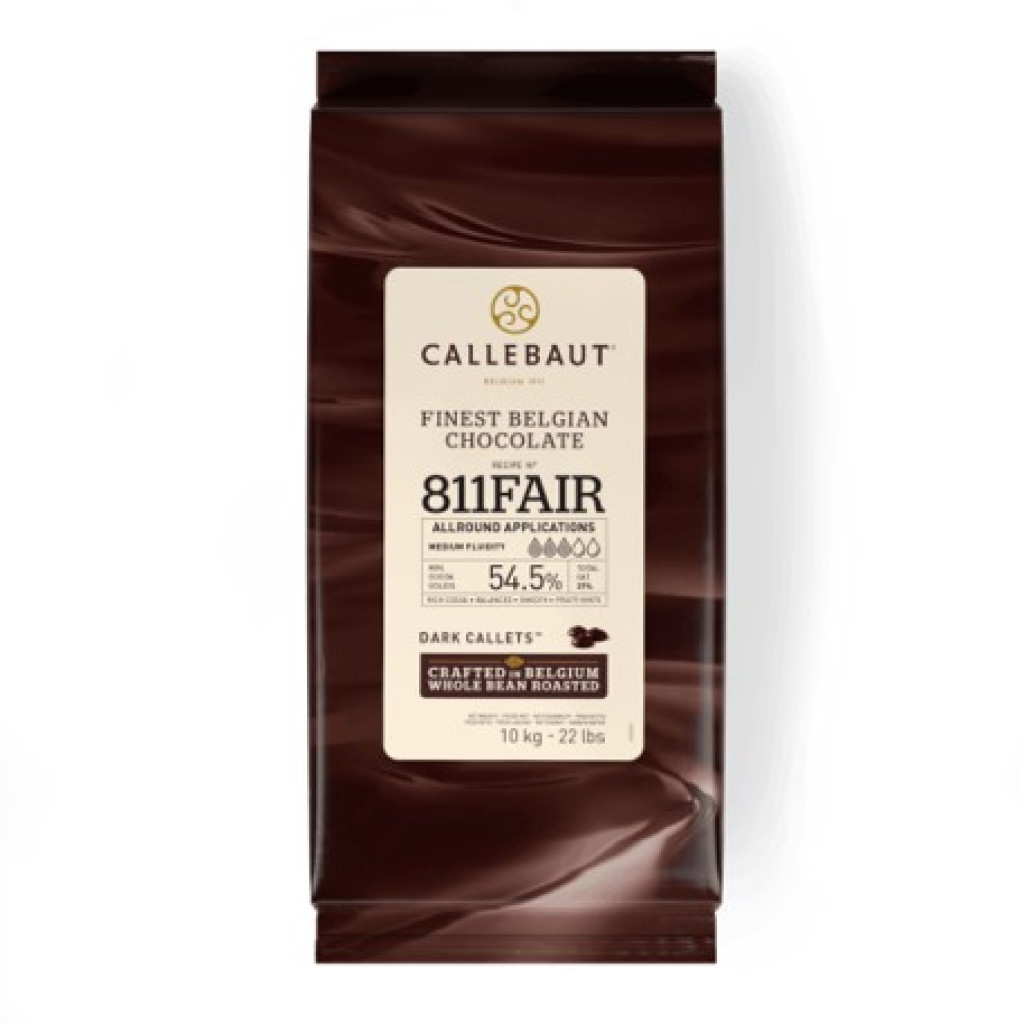
With its standard fluidity, you can count on its fantastic workability in a wide variety of applications, such as moulding and enrobing confectionery or flavouring ganaches, mousses, crèmes, crémeux, ice cream and sauces.
Callebaut 70% Dark (70-30-38)
This Callebaut Belgian Dark Couverture has 70% cocoa solids. It is made with the finest cocoa beans sourced from around the world, as well as natural vanilla and 100% pure cocoa butter. It’s an extra-bitter dark chocolate with a great boost of roasted cocoa.
Please note: in the summer months, the chocolate may melt a little when shipped. This will not affect the chocolate and will be fine once re-melted. Shipping any temperature-sensitive items between September and April is at the risk of the buyer.
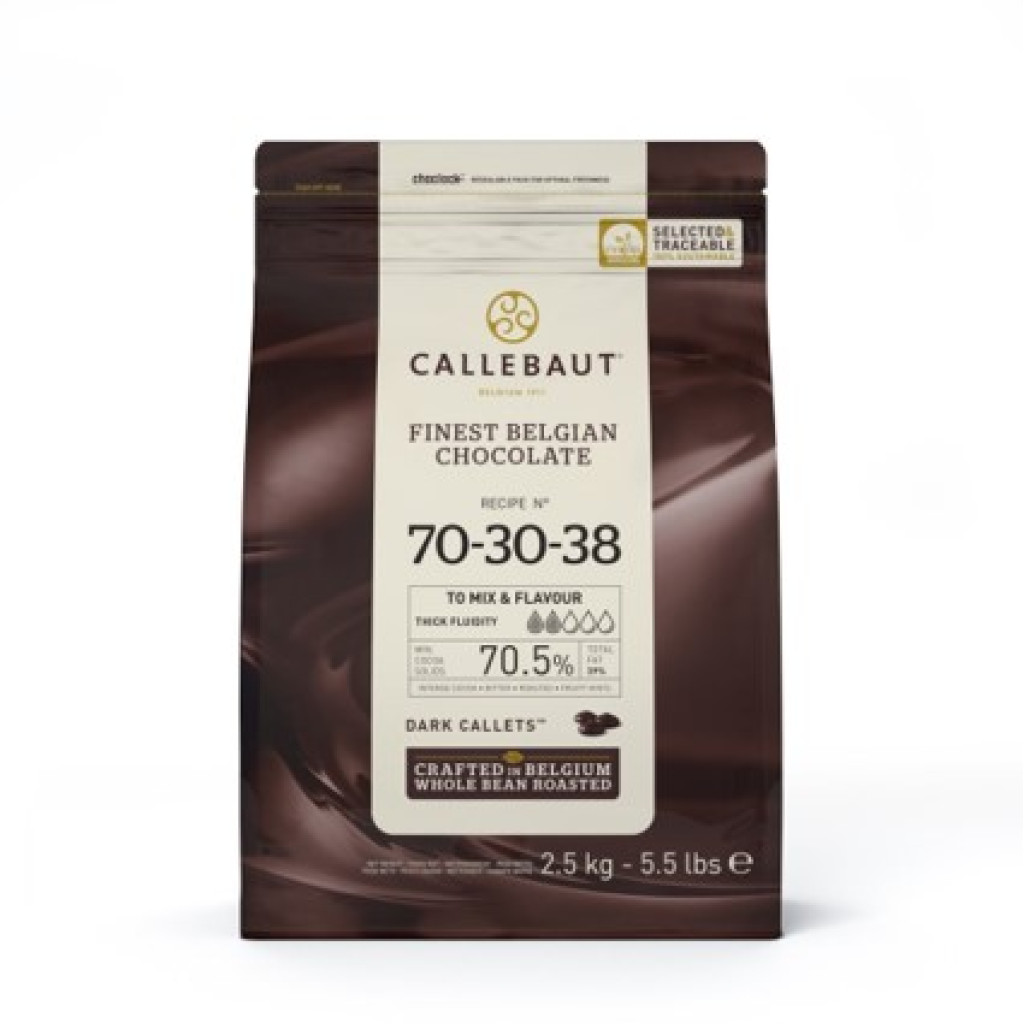
- Best for: High-cream ganaches, or pairing with intensely sweet elements like caramel or meringue.
Callebaut 823 Milk Couverture Callets
A Belgian Milk Couverture with 33.6% cocoa solids. Once again, this product is made with the finest cocoa beans from around the world, complete with natural vanilla and 100% pure cocoa butter. Its flavour profile is a balanced milk, cocoa and caramel taste.
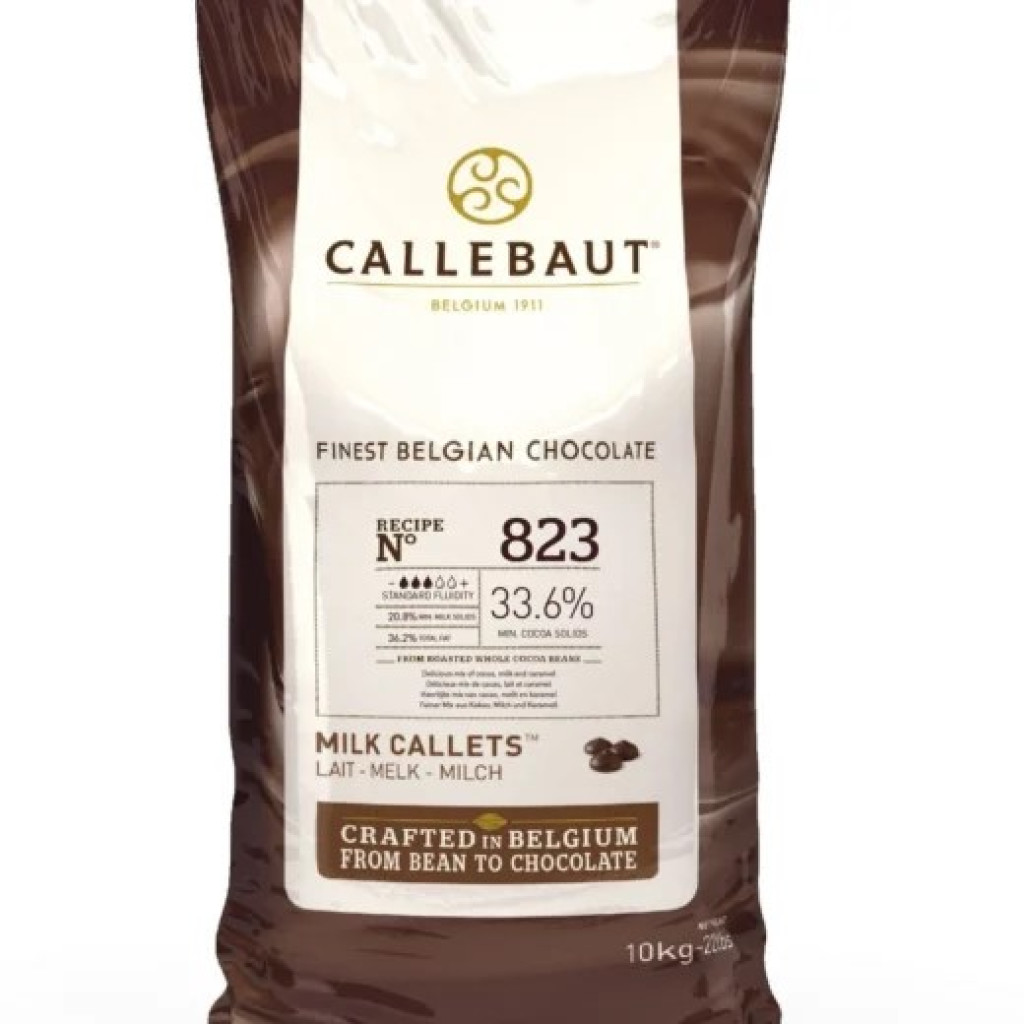
Made from the luxurious Wieze cocoa blend, the Callebaut Milk Chocolate is a perfect addition to be used in cakes and desserts such as ganaches, sauces, mousses and caramels. Note: Occasionally, the callets may be out of stock in its original packaging and we may replace them with another 2.5kg bag which is repackaged from a 10kg bag.
Callebaut W2 White Couverture Callets
This Belgian White Couverture with 28% cocoa solids is made with the finest cocoa beans sourced from around the world, natural vanilla and 100% pure cocoa butter. This white chocolate can be paired with a wide range of ingredients and flavours: from sour to bitter, from spices to herbs, and from fruits to beers.
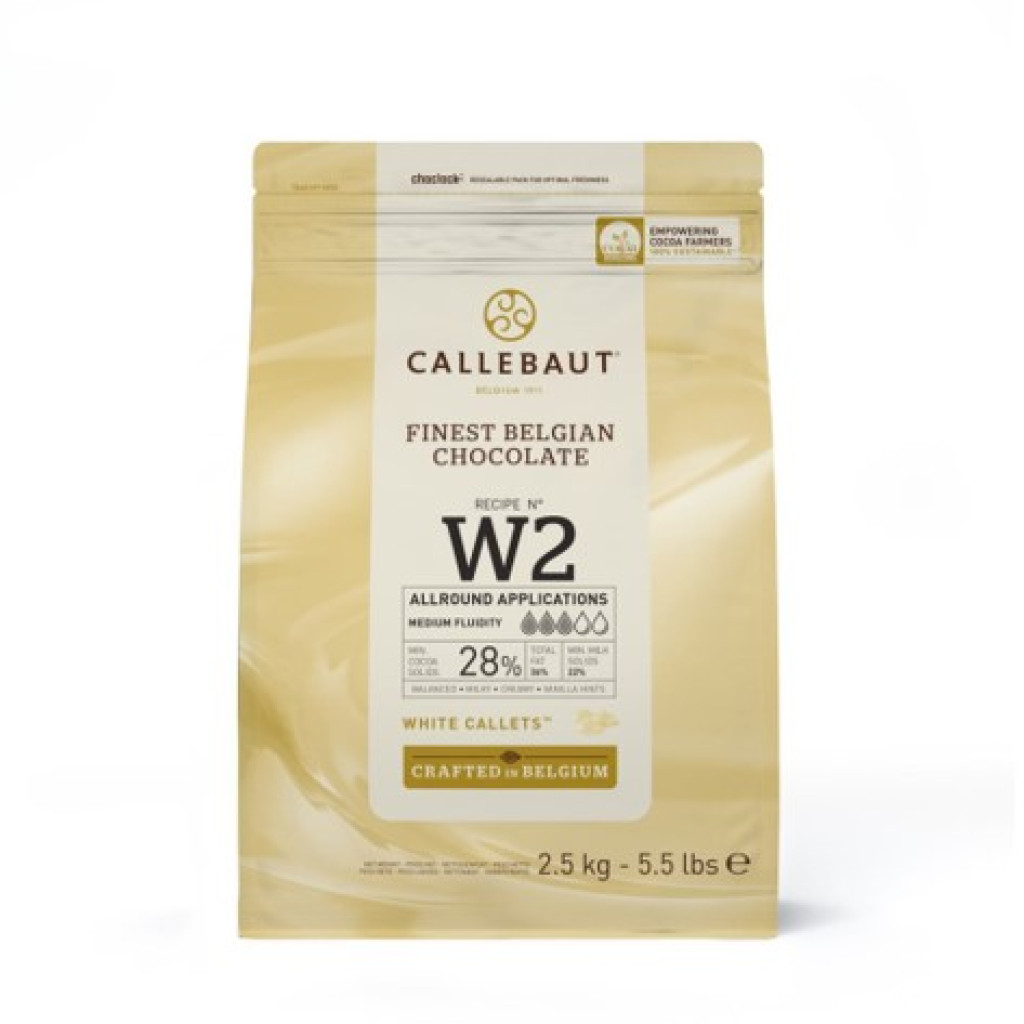
With medium viscosity, this is a great all-round chocolate. Used in chocolate bars or hollow figures, it takes you by surprise with its lovely satin gloss and snappy texture. And fully rely on it to flavour mousses, crèmes, ice creams, drinks, sauces, etc as well. Note: Occasionally, the callets may be out of stock in its original packaging and we may replace them with another 2.5kg bag which is repackaged from a 10kg bag.
(Explore the full scope of Callebaut’s craftsmanship directly at Callebaut Australia).
Format & Storage: Callets vs. Blocks
Format is a practical decision for a kitchen working to a deadline:
Callets: Ideal for hand-tempering. Because every piece is identical in size, they melt evenly. They also weigh and portion cleanly, which removes the guesswork when seeding a bowl.
Blocks (5kg): Best suited for high-volume kitchens melting large quantities directly into a tempering machine.
A note on Australian summers: Heat destroys temper. Milk and white chocolates are especially vulnerable to blooming (the grey, streaked fat rising to the surface) because their milk fats are softer. Buy the pack size you can safely store in a temperature-controlled environment before the weather turns.
Commercial Kitchen Applications: What Can You Make?
So, what can you actually do with this liquid gold? Pretty much everything! Thanks to a generous dose of cocoa butter, Callebaut couverture is the ultimate shapeshifter on a commercial bench. Want to dunk truffles, mould hollow shells, or pour a flawless glaze? Melt down the classic 811 Dark or W2 White for a super-thin, glossy coat that sets with a cracking snap.
Need to whip up a velvety, decadent ganache or a mousse that won’t quit? Reach for the creamy 823 Milk, or bring in the heavy-hitting 70% Dark to punch right through rich caramel and dairy. Whether you’re airbrushing, dipping, or building praline shells, this chocolate is engineered to make your kitchen crew look like absolute pastry geniuses!
Frequently Asked Questions
What do the numbers 811, 823, and W2 actually mean?
They are Callebaut’s internal recipe numbers, not quality rankings. A trained kitchen relies on these numbers because they guarantee identical behaviour; the same fluidity, temper curve, and set.
Is Callebaut couverture worth more than a supermarket cooking block?
For anything you temper, mould, or enrobe, yes. Couverture uses pure cocoa butter, which is required to achieve a glossy, snapping finish and a coating that flows thin. Supermarket compound chocolate relies on cheaper vegetable oils, which cannot match the performance or clean mouthfeel of true couverture.
Can you melt Callebaut callets without tempering them?
Yes, and for plenty of jobs you should. If you are baking the chocolate, folding it into a mousse, or suspending it in a cream (like a ganache), you can skip the temper. You only need to temper chocolate when it must set hard, snap, and shine on its own, such as for bonbon shells, enrobed bars, or chocolate decorations.
Do Gold and Ruby callets replace a dark or milk couverture?
No. Gold (caramel chocolate) and Ruby (fruity, pink profile) are specialty chocolates designed to be the defining feature of a plate. They do not behave like a workhorse dark or milk chocolate. Keep them for specific applications, and rely on the 811, 823, and W2 for your everyday coating, moulding, and ganache work.
If you’re matching couverture to the work on your bench, Foodistribute supplies a fantastic range of Callebaut chocolate products. We offer food service distribution to Sydney, Melbourne and the rest of Australia. Talk to our team about the recipe your menu needs.
-
 Wholesale Bakery Supplies: How One Supplier Can Streamline Your Operations
Running a business that needs wholesale bakery supplies? If so, you might be wondering if it’s better to partner with a single supplier or multiple. This is a good question to ask and there’s certainly a lot to consider. That’s exactly what we’re going to cover today. In this article, we’ll explain the differences between the […]
Read More -
 Wholesale Food Supply: Important Questions to Ask as a Buyer
Wondering if using a wholesale food supplier is the right move for your business? From reliable supply to accessing specialty products, there are certainly a range of benefits on offer if you decide to use this approach. If this is your first time using a wholesale supplier, it’s only natural to have a few questions. […]
Read More -
 Types of Food Distributors in Sydney: Which Fits Your Menu
Whether you’re well established or planning a brand-new venture, a food service business is nothing without a dependable supply chain. Finding the right supplier and setting up the right processes is the most crucial decision to make. So, if you’ve been trying to find a new food distributor in Sydney, we’re going to break down […]
Read More -
 How Can I Find the Right Wholesale Food Supplier? Key Criteria and Qualities to Look For
From cafes to bakeries, pubs, and restaurants, a reliable supply chain is integral to anyone in the Australian food service industry. When deliveries show up on time and as promised, operations naturally fall into place. When things don’t arrive on schedule and orders aren’t fulfilled, trouble is likely to follow. The question is – ‘How […]
Read More