


 Check for Free Delivery
Blog
Asian Grocery Wholesale: 10 Staples and How to Vet a Supplier

By Foodistribute
Asian restaurants are synonymous with the Australian food scene. From Japanese, Indian, Chinese, Malaysian, Korean, Thai, Vietnamese, and more, there’s amazing food to be found everywhere you look.
When it’s time for these restaurants to craft a menu, quality staples are what keep these kitchens running on a daily basis – and for restaurant owners, this starts with finding the right Asian groceries wholesaler. Get this right and the menu runs itself; get it wrong and you are chasing stockouts every service.
A supplier is the one you rely on to deliver everything from staples to specialised items, including jasmine rice, soy sauce, fish sauce, rice paper and curry paste, plus lines sourced to order. With all this in mind, we’ve compiled a list of 10 staples and how to properly vet your supplier.
Which 10 Asian staples should a restaurant stock first?
Strip an Asian kitchen back to what it cannot run a lunch service without, and the list is shorter than most supplier catalogues suggest. Ten staples carry the bulk of a Thai, Vietnamese, Chinese or Japanese menu, and a kitchen reorders them week after week.
| STAPLE | WHAT IT DOES ON THE LINE |
| Jasmine rice | The fragrant long-grain base under most Thai and Lao plates |
| Soy sauce (light and dark) | Light for everyday seasoning, dark for colour and depth |
| Fish sauce | The salty, savoury backbone of Thai and Vietnamese cooking |
| Oyster sauce | The glossy umami hit in stir-fries and cooked greens |
| Sesame oil | The toasted finishing oil for dressings and marinades |
| Curry paste | Red and green Thai bases that start a curry in minutes |
| Rice paper | The wrappers your fresh rolls are built on |
| Rice vermicelli | Thin rice noodles for salads, soups and rolls |
| Coconut milk | The body of curries, laksa and sweets |
| Rice wine vinegar | The clean acidity behind dipping sauces and pickles |
Of course, these are general staples, and they don’t apply to every restaurant. However, if you do rely on the staples above, the next step is to figure out what they actually cost you.
Wholesale ordering vs cash-and-carry
Priced per litre and per kilo, the cash-and-carry run usually results in the most expensive fish sauce and rice a kitchen will ever buy.
A trade buyer on a wholesale account pays the wholesale price on full cartons and bulk pack sizes, a twenty-kilo sack of rice or a five-litre drum of soy, instead of the marked-up single units a retail aisle is built to sell. That gap widens with volume, because the busier the kitchen, the more times the retail markup quietly multiplies.
The drive costs you twice: the fuel and the trip, and the hour a chef spends in a car park instead of on the pass. For a venue turning tables every night, that lost hour is the dearer of the two.
Skip the trade account to keep things simple and you lock the kitchen into retail margins on every bottle, plus a standing tax on your chef’s time. Buying in bulk on wholesale terms removes both, which is the point of ordering as a business rather than a shopper.
Wholesale terms only pay off if the supplier behind them holds up, which is what these checks put to the test.
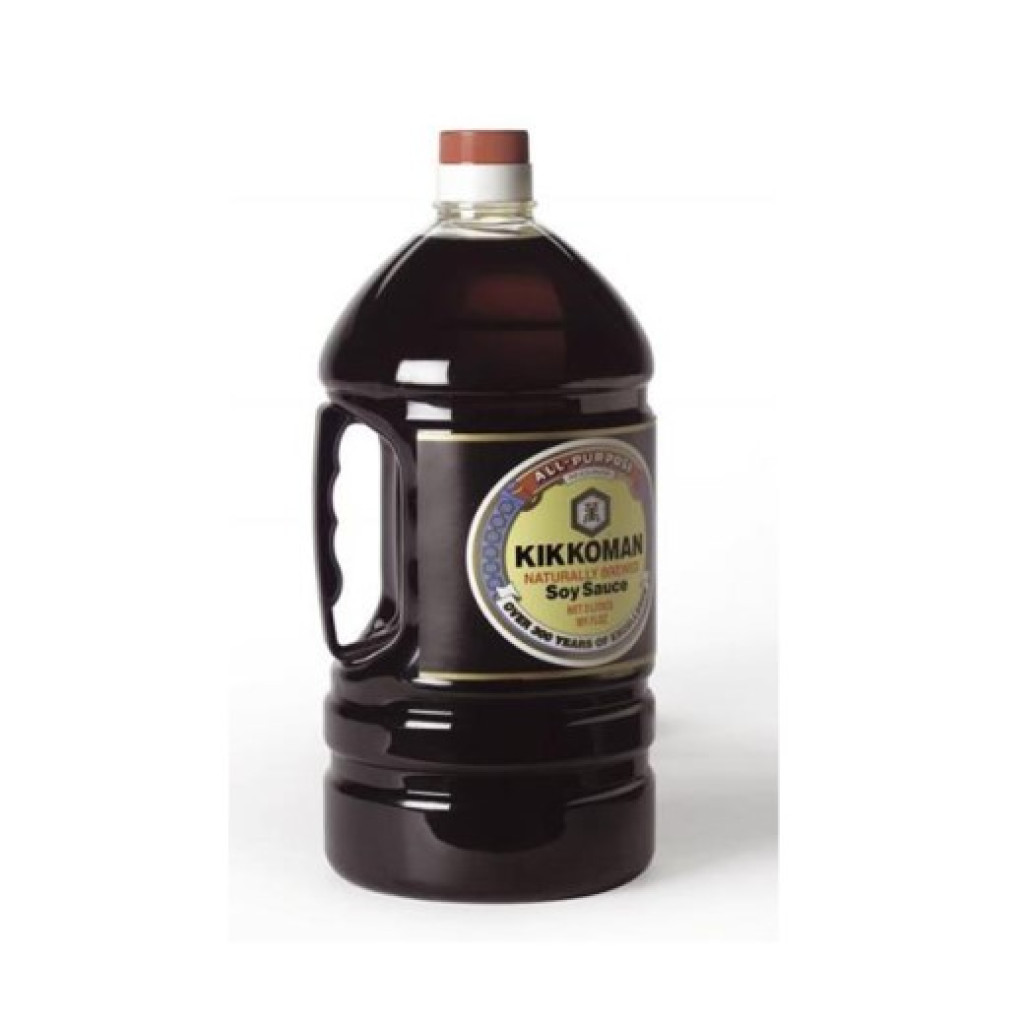
Kikkoman 3L Soy Sauce: Available in Bulk at Fooddistribute
Five checks to verify with your wholesaler
Before you open an account with any food supplier, run five checks. Each one guards against a failure that surfaces later, at the worst possible service.
- Inventory: Does the bulk supplier hold your staples in stock every week, or do lines vanish for a fortnight? Consistent supply is the difference between a menu you can promise and one you keep apologising for.
- Product range: Can one account cover the everyday staples and the hard-to-find specialty lines, so you are not splitting orders across three suppliers?
- Delivery capacity: Will they deliver to every site you run, not just open a warehouse door for pickup?
- Industry compliance: Can the supplier show that the food meets Australia’s biosecurity import conditions, food standards and record-keeping rules?
- Custom sourcing: When you need a line they do not list, will a buyer source it, or does the conversation end at the catalogue?
Opening a trade account and placing an order
Partnering with a wholesaler is usually a simple and easy process, but it’s always best to check with the supplier’s website or contact them directly.
First, apply for a trade account with your business details and ABN, which unlocks the trade pricing retail shoppers never see. Next, browse the range and place a first order, either through the online shop or by phoning a trade order through to the team. A larger opening buy often ships as a pallet order, consolidating cartons into one delivery instead of a string of small drops.
Once you know what the kitchen burns through, set a repeat order for the staples: a standing weekly list that lands without anyone re-keying it. From there, trade ordering is mostly topping up specials and specialty lines around that fixed core. A distributor with more than twenty years in food supply and around-the-clock online support can sort an urgent gap outside standard trading hours.
Set that standing order with the wrong supplier, though, and the gaps it leaves cost more than any price you negotiated.
Be wary of supply gaps
A stockout rarely shows up on an invoice, which is exactly why it is underrated. The cost lands on the floor instead: the dish you eighty-six, the table that ordered it, and the credibility of a menu that promised something it could not plate.
Chase the lowest carton price to a supplier who runs thin on stock, and the few dollars you saved vanish the first service you send a chef to a retail shop at full price, mid-shift, to cover the gap. Consistent supply is the quiet asset here, holding depth on core lines and delivering on a cadence you can build a roster around.
Hospitality runs on thin margins at scale. It is a sector generating over $40.4 billion in retail turnover each year and employing 350,000 people Those margins do not survive services you cannot fill. Reliable supply is not the timid choice against a cheaper quote. It is the one that keeps the covers you priced the menu around actually turning.
Holding the core reliably is one half of range; the other is what happens when the line you need is not on the list.
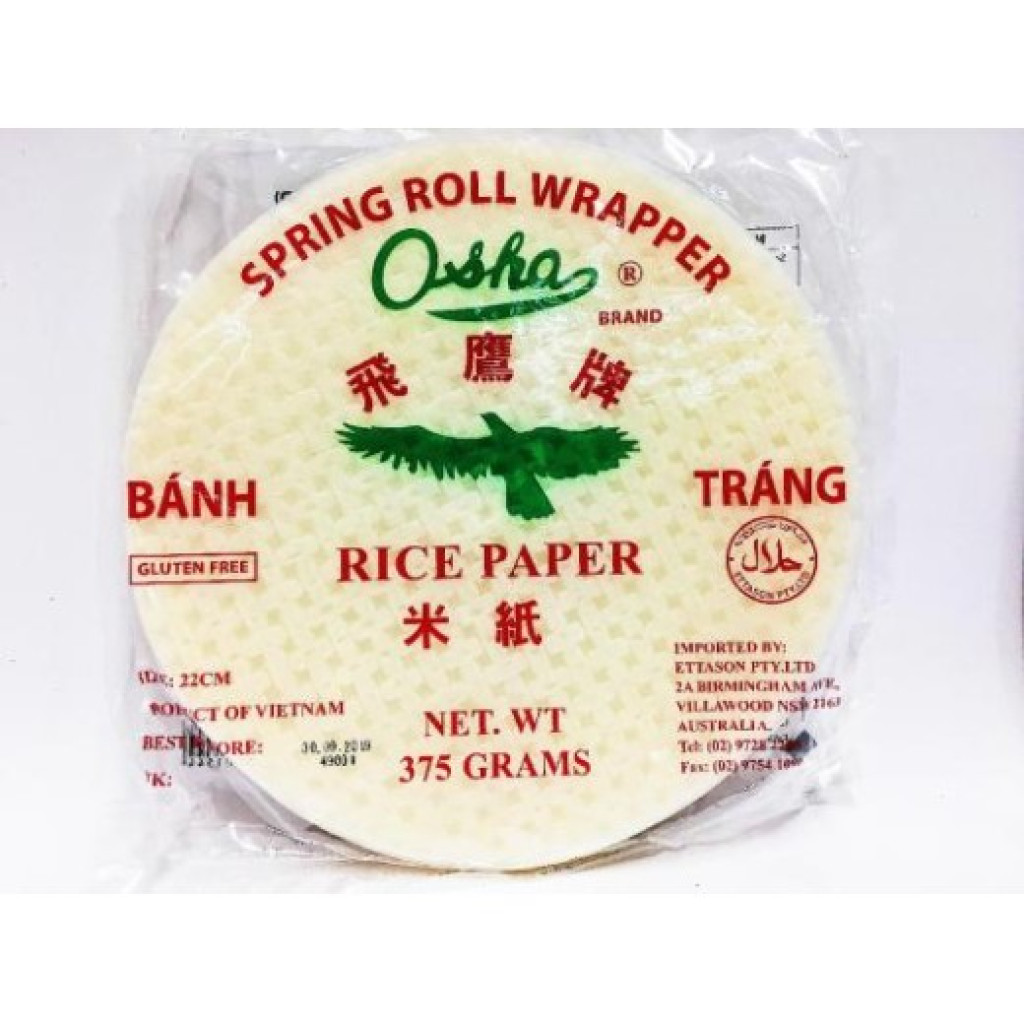
Osha Rice Paper – 375g: Available Now
Look for allergen labelling
Your menu’s allergen answer is only ever as accurate as the label on the bulk pack it came from. The Food Standards Code sets the allergen labelling rules, and since 25 February 2024, Standard 1.2.3 and Schedule 9 have tightened how allergens must be declared.
The list reads like an Asian pantry: soy, wheat and gluten-containing cereals, fish, crustacea, molluscs, eggs, milk, peanuts, tree nuts, sesame, lupin and sulphites. A soy sauce carries soy and often wheat gluten, oyster sauce carries mollusc, fish sauce carries fish, and sesame oil carries sesame, so a single stir-fry can touch four declarable allergens at once. Sulphites alone must be declared once they reach ten milligrams per kilogram.
For food served without a label, such as a café or takeaway dish, those declarations still have to be displayed with the food or given on request using the required names, so the allergen information stays accurate from pack to plate. Trust an unlabelled drum and you cannot honestly answer a coeliac or shellfish-allergic diner, which is the one place a supply shortcut turns into a safety failure.
The First Choice for Asian Grocery Wholesale Services in Sydney & Melbourne
From the CBD to the suburbs, we’re a leading Asian grocery wholesale supplier serving Sydney, Melbourne, and the rest of Australia’s major cities. Whether you’re after staples or specialty products, we supply top-notch products at excellent prices.
Here’s why we’ve become Australia’s wholesalers of choice:
- Whether it be the delicate balance of Thai flavours or the robust spices found in Indonesian dishes, we understand the nuances of Asian cuisine.
- Local businesses can depend on our regular deliveries to keep pantries well-stocked with staples such as rice vermicelli, nori sheets, tamarind paste, and more.
- Our commitment to quality means that we select only the finest products, ensuring you can offer your customers the authentic dining experience they seek.
More Frequently Asked Questions
Is there a minimum order for wholesale Asian groceries?
It depends on the wholesaler. Many set a minimum order value, and some frame it as a free delivery threshold rather than a hard floor, so a larger order ships without a delivery fee. Distance matters too, since a metro drop and an interstate pallet carry different economics. Confirm both the minimum and the delivery threshold when you open the trade account, before either affects how you schedule restocks.
Do Asian grocery wholesalers sell to the public or trade only?
Most are trade-focused, selling to businesses on a trade account rather than to walk-in retail customers. The usual customers are restaurants, cafes, caterers and specialty food retailers buying in bulk at wholesale prices. You generally need an ABN to open an account. Some wholesalers do supply retailers as well, but the pricing, pack sizes and delivery are built around trade buyers moving volume, not single-unit shoppers.
Can I order online or do I need to phone through a trade order?
Both are common, and a good wholesaler runs an online shop alongside phone ordering. Online suits repeat orders and browsing the range, while a call helps with a complex or urgent trade order. Standing weekly orders remove most of the re-keying once your core list settles. Online ordering backed by around-the-clock support means an urgent gap can be raised outside standard trading hours.
Do wholesalers stock genuine Thai jasmine rice in bulk?
Yes. Jasmine rice in bulk sacks is a core line for any full-range Asian wholesaler, usually alongside Japanese, Malaysian, Thai and Indonesian brands across hundreds of products. If provenance matters for your menu, check the country-of-origin labelling that imported food must carry under Australian rules. Buying the sack size that matches your weekly burn keeps the price per kilo down and the rice turning over fresh.
Are imported Asian ingredients safe and compliant with Australian rules?
They must be. Food imported for sale has to meet Australia’s biosecurity import conditions, food standards and imported-food safety requirements before it can be sold. Declarable allergens must be labelled under the Food Standards Code. A compliant supplier also keeps records of where each product came from, with batch identification and quantities, so a line can be traced quickly if a recall is ever issued.
If you run a kitchen sourcing bulk Asian staples and want a wholesaler chosen on supply reliability rather than the lowest carton price, Foodistribute supplies wholesale Asian groceries, specialty ingredients and custom sourcing to restaurants and cafes across Sydney, Melbourne and nationally across Australia.
-
 A Buyer’s Guide to Callebaut Couverture
By Foodistribute Founded in Belgium way back in 1911, Callebaut has been setting a new standard for the art of chocolate making for more than a century. Today, one of their signature products is the Callebaut couverture, a chocolate carrying enough cocoa butter to flow thin and set with a snap. Below, we’ll explain some […]
Read More -
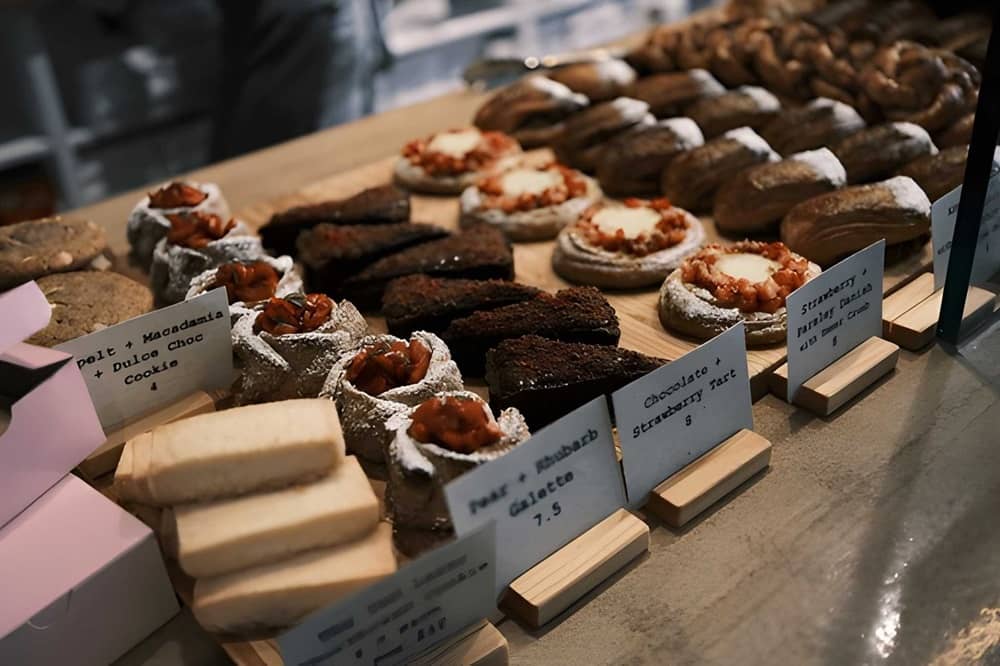 Wholesale Bakery Supplies: How One Supplier Can Streamline Your Operations
Running a business that needs wholesale bakery supplies? If so, you might be wondering if it’s better to partner with a single supplier or multiple. This is a good question to ask and there’s certainly a lot to consider. That’s exactly what we’re going to cover today. In this article, we’ll explain the differences between the […]
Read More -
 Wholesale Food Supply: Important Questions to Ask as a Buyer
Wondering if using a wholesale food supplier is the right move for your business? From reliable supply to accessing specialty products, there are certainly a range of benefits on offer if you decide to use this approach. If this is your first time using a wholesale supplier, it’s only natural to have a few questions. […]
Read More -
 Types of Food Distributors in Sydney: Which Fits Your Menu
Whether you’re well established or planning a brand-new venture, a food service business is nothing without a dependable supply chain. Finding the right supplier and setting up the right processes is the most crucial decision to make. So, if you’ve been trying to find a new food distributor in Sydney, we’re going to break down […]
Read More