

 Check for Free Delivery
Blog
Pistachio Paste for Patisserie: The Difference Between 100% Pure and Sweetened Butter

The Foodistribute team: Specialty wholesale food distribution in Sydney & Melbourne
About to buy pistachio paste for a patisserie? A true 100% ground pistachio paste beats both a DIY batch and a sweetened, coloured spread sold as butter. Why? It all starts with its pure, concentrated flavour that has no added sugar, almonds, or essence to mute it.
The difference between the two generally boils down to three aspects, and these are the grade, oil content and consistency. Below, we’ll explain all of these in detail and show why it’s important to read the ingredient list, not the label.
What Is Pistachio Paste, and How Does Pure Paste Beat Sweetened ‘Butter’?
Pistachio paste is finely ground pistachios that are blended into a thick, concentrated base, sometimes with a little oil or sugar to help it come together. A true 100% version carries nothing but the nut, so the flavour lands pure and deep.
The catch for a pastry kitchen is the label. A jar marked ‘butter’, ’cream’, ’spread’ or ’crema di pistacchio’ (the Italian name for pistachio cream), can actually mean very different things. For example, some are sweetened, while others are not.
Many alternatives feature a lower percentage of the nut, and supplement it with sugar, milk powder or almond extract. It’s these additions that mute the pistachio flavour you are paying for. Some also add green colour to mask a duller paste.
Once you can tell the difference between authentic pistachio paste and a sweetened or coloured butter, the next call is whether to buy it or grind your own.
When Should a Kitchen Buy Pistachio Paste Instead of Making It?
Unless this is something you’re experienced at doing already, making it from-scratch, batch after batch, takes a mountain of effort. Blanching the nuts in boiling water and rubbing off the skins takes about half an hour. Then the time for the food processor, it’s not always worth pursuing.
This is especially true if you need pistachio paste in large volumes. Every batch ties up a bench, a processor and two hands, and no two come out identical. Another byproduct of a DIY approach is that true consistency is very tough to achieve
That’s why working with a supplier is almost always the way to go. This way, genuine paste arrives the same every time, already blanched, skinned and ground, so the flavour and colour are locked before it reaches your bench. Buying also frees you from sourcing good raw nuts, which are expensive. A distributor that carries pure pistachio paste alongside other hard-to-find lines turns a half-day job into a tub you open.
Which Grade Wins for Patisserie: Sicilian, Bronte or Domestic?
Pistachios are harvested in various continents across the globe. Without a doubt, one of the most notable varieties is Sicilian pistachios. Grown on the volcanic soil around Mount Etna, they carry a richly concentrated and naturally sweet flavour that brings a real contrast to the flavours typical of Turkish, Iranian or California nuts.
Bronte is certainly the name to know when it comes to the Sicilian range. It is a small-production pistachio grown around the town of Bronte on Etna’s slopes, prized for the deepest flavour and colour. It costs the most and suits the showpiece, a pistachio tart or a plated dessert where the nut is the star.
Domestic and California-grown nuts have a more mild flavour and are generally available at a cheaper price point. You can use them for a pistachio buttercream that is tinted and flavoured among other ingredients, or a mid-grade paste does the job and protects your margin.
Buying paste by stated origin tells you more about the result than the word ‘premium’ on a label ever will, especially once you become used to the specific nuances of each variety.
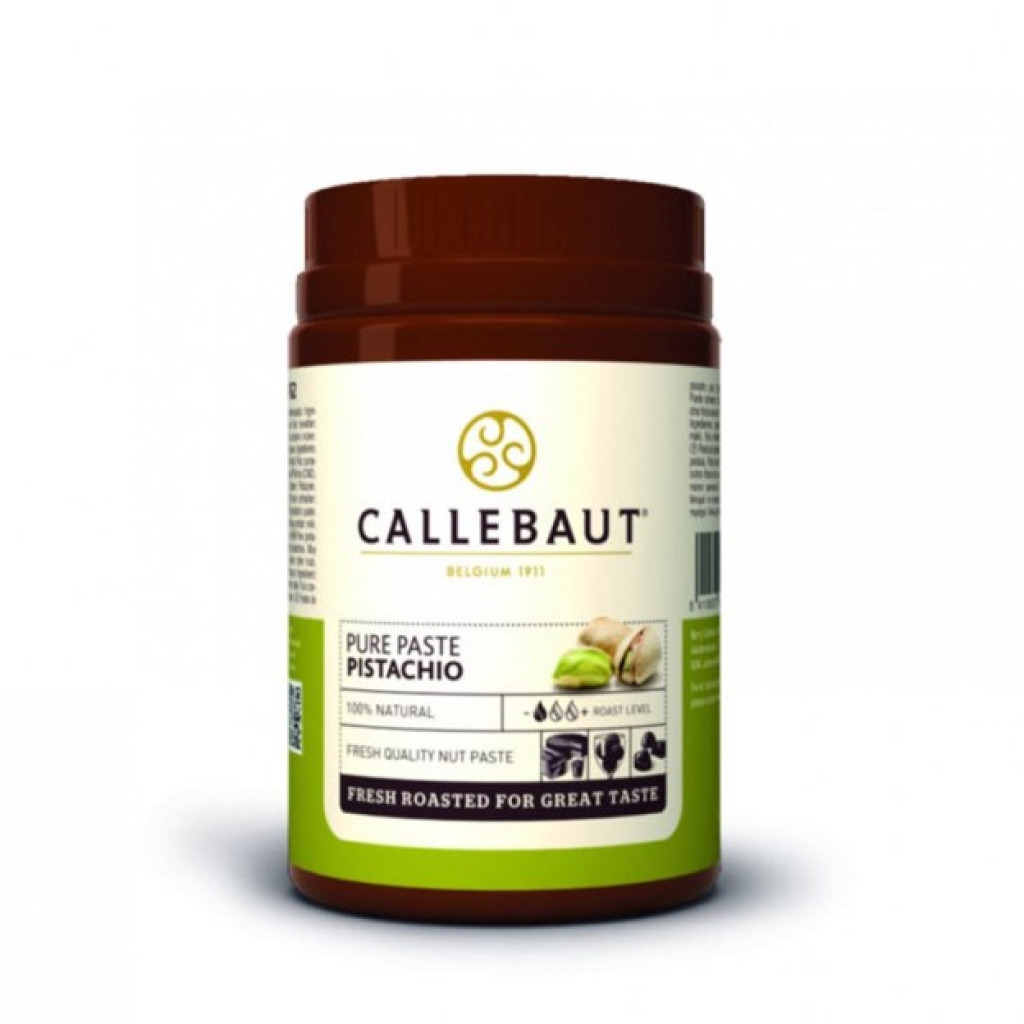
Callebaut Pistachio Paste – 1kg: Available Now at Fooddistribute.
Raw or Roasted Pistachios: Which Paste Holds Flavour Longer?
This is another important decision.
Here’s a general rule to follow: raw wins for colour, and it is the safer default for patisserie. Raw pistachios blend to a bright green and puree faster, while roasting before grinding turns the paste dull and brown and dampens the flavour. If a vivid green matters, and in pastry work it usually does, start raw.
For the cleanest, greenest, longest-tasting paste, use raw nuts and skip the oven. Reach for roasted only when you want a deeper, toastier flavour and you are willing to manage the colour. Flavour holds longest when the nut has not been cooked twice.
Roasting deepens flavour but mutes the colour, which is exactly why the blanching step carries so much weight.
How Long Does Pistachio Paste Last, and Why Does the Oil Separate?
Pistachio paste will keep for about one to two weeks in the fridge and up to three months in the freezer. The best storage method is to keep it in an airtight container so it does not pick up other smells or dry at the edges. In a busy kitchen, freezing in small portions is the smart approach as you’ll only thaw what’s needed in a particular service.
One part that worries people is the oil on top. A layer of oil rising to the surface is normal, not spoilage. Pure paste is mostly made of ground nuts, and the nut’s own natural oil separates out as it sits. Stir it back through and the paste is fine. You will see the same thing if you fold paste into whipped cream and leave it, because the oil pools by the next day is why oil-rich paste is best used fresh in delicate mixes.
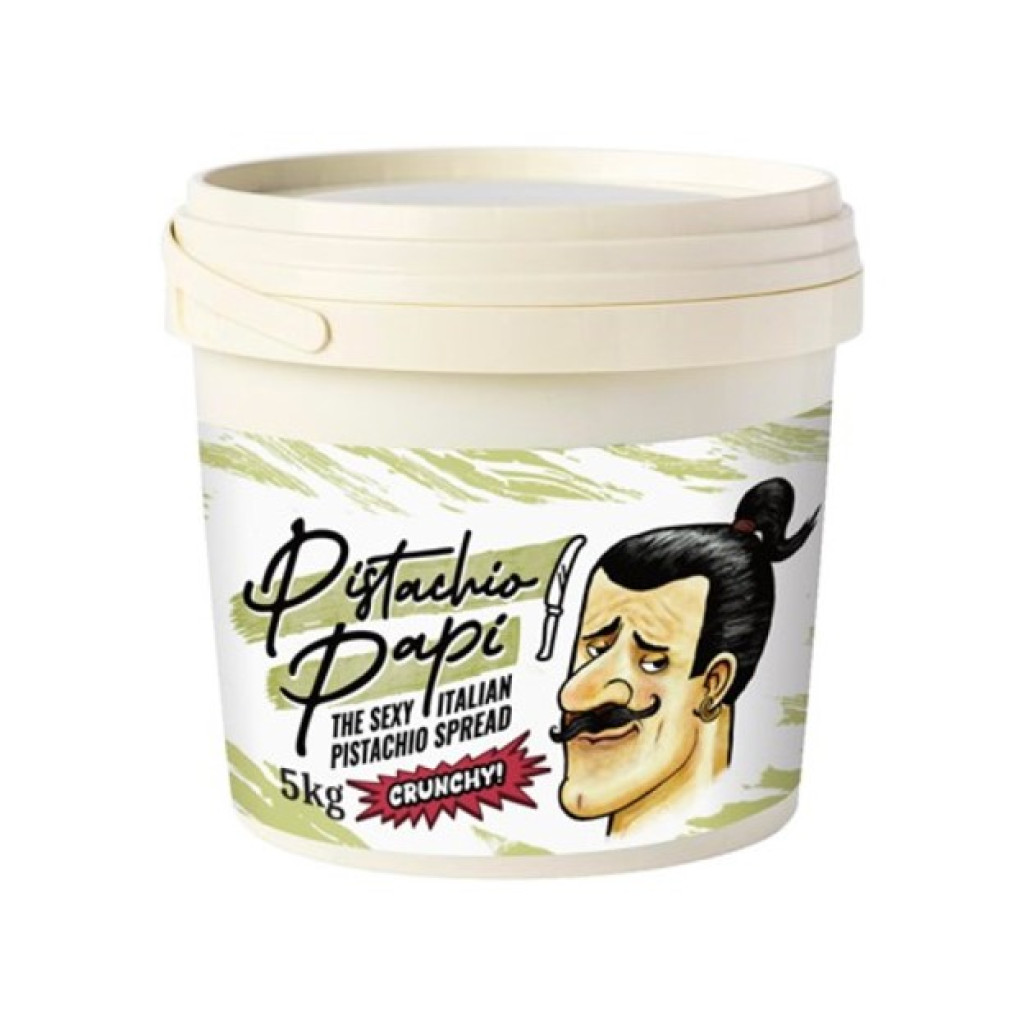
Pistachio Papi Crunchy Pistachio Spread – 5kg: Available Now
Watch for the real warning signs instead: a sour or paint-like smell, which typically means the oil has gone rancid and the batch is done.
A stable, well stored paste is only worth buying if it performs where you need it, so here is where it goes to work.
Get High-Quality Pistachio Paste in Melbourne, Sydney and Australia Wide
Since 1998, Foodistribute has been a trusted marketplace for businesses, restaurants, cafes, and individuals to get quality products at competitive prices. Among our unique delicacies is the Pistachio Paste, a versatile ingredient. As a smooth, homogeneous paste, Callebaut Pistachio paste is a high-quality paste with a fresh, nutty taste. Contact us to make your dishes taste more delicious today!
Need pistachio paste for a Melbourne cafe? Craving a taste of excellent Pistachio Paste in Sydney? Foodistribute is your all-in-one source for genuine pistachio paste products. It’s an excellent way to retain happy clients with a sweet tooth!
Our high-quality Pistachio Paste is an outstanding ingredient for any recipe, bringing a burst of natural pistachio flavour to your dishes. Whether you’re making sweet treats, savoury sauces, or exotic dishes, our Pistachio Paste is the perfect addition.
Frequently Asked Questions
What can you use pistachio paste for in a commercial kitchen?
Plenty. A 100% paste carries pistachio flavour into buttercream for macarons, into gelato and ice cream, and into fillings for croissants, tarts, eclairs, choux and cupcakes. It works in cheesecakes and as a frangipane base beaten with butter. It also crosses into savoury work, stirred through sauces or a crust for lamb or chicken. Use it where you want deep nut flavour, not as a spread on its own.
How long does pistachio paste last once it is opened?
Sealed in an airtight container in the fridge, expect about one to two weeks of peak quality, and some makers get two or three weeks. In the freezer it holds up to three months. Freeze it in small portions so you thaw only what a service needs, and thaw in the fridge rather than on the bench. If the oil smells sour or sharp, the batch has turned and should go.
Is pistachio paste the same as pistachio spread or butter?
No, and the names are not standardised, so read the ingredients. A true paste is thick and concentrated, mostly ground pistachio, made to flavour other things. Pistachio butter is the 100% pure version with nothing added, smooth like almond butter. A cream or spread, including crema di pistacchio, the Italian pistachio cream, is sweetened and softer, made for spreading. Same shelf, different jobs, so check what is actually in the jar.
Should you roast pistachios before making pistachio paste?
Not at home. Roasting raw nuts yourself before grinding browns them and gives a dull, brownish paste with a weaker flavour. Blanching, a short boil, softens the nuts and keeps the bright green instead. Nuts that were bought already roasted can still make a good green paste if you blanch and skin them properly first. For the cleanest colour and the longest-holding flavour, start with raw, skip the oven, and blanch.
Are shelled or unshelled pistachios better for paste?
Shelled, in almost every case. You still have to blanch and skin the nuts, so starting in-shell only adds a slow second job before you can begin. Shelled nuts cost a little more per kilo, but they save real bench time at any volume and the usable yield per kilo is higher. Keep unshelled only if you have spare hands and a reason to shell by hand. For making paste, shelled is the faster, cleaner start.
If your kitchen wants the pure flavour and stable green of a true pistachio paste without grinding your own, Foodistribute supplies specialty pistachio paste and wholesale ingredients to cafes, restaurants and bakeries across Sydney and Melbourne.
-
 A Buyer’s Guide to Callebaut Couverture
By Foodistribute Founded in Belgium way back in 1911, Callebaut has been setting a new standard for the art of chocolate making for more than a century. Today, one of their signature products is the Callebaut couverture, a chocolate carrying enough cocoa butter to flow thin and set with a snap. Below, we’ll explain some […]
Read More -
 Wholesale Bakery Supplies: How One Supplier Can Streamline Your Operations
Running a business that needs wholesale bakery supplies? If so, you might be wondering if it’s better to partner with a single supplier or multiple. This is a good question to ask and there’s certainly a lot to consider. That’s exactly what we’re going to cover today. In this article, we’ll explain the differences between the […]
Read More -
 Wholesale Food Supply: Important Questions to Ask as a Buyer
Wondering if using a wholesale food supplier is the right move for your business? From reliable supply to accessing specialty products, there are certainly a range of benefits on offer if you decide to use this approach. If this is your first time using a wholesale supplier, it’s only natural to have a few questions. […]
Read More -
 Types of Food Distributors in Sydney: Which Fits Your Menu
Whether you’re well established or planning a brand-new venture, a food service business is nothing without a dependable supply chain. Finding the right supplier and setting up the right processes is the most crucial decision to make. So, if you’ve been trying to find a new food distributor in Sydney, we’re going to break down […]
Read More